
When searching for the best divorce lawyers stafford va, understanding the local filing process is your first step to a successful outcome. Filing for divorce in Stafford, Virginia requires a clear plan, careful paperwork, and an understanding of the Stafford County Circuit Court’s local procedures.
Additionally, divorce lawyers stafford va can help you avoid common delays, protect your parental rights, and keep your case focused on practical outcomes. This guide walks you through the divorce filing process step-by-step, from confirming eligibility to receiving your Final Decree of Divorce, while explaining why the right legal support matters at each stage.
Furthermore, Stafford’s court procedures can feel different from nearby jurisdictions. Knowing what to expect early can reduce stress, prevent expensive mistakes, and keep your divorce moving forward with fewer surprises.
Table of Contents
- Reason 1: Divorce lawyers stafford va understand local court logistics
- Reason 2: Divorce lawyers stafford va help you choose the right grounds
- Reason 3: Your paperwork is completed correctly the first time
- Reason 4: Service of process is handled properly
- Reason 5: Settlement strategy keeps you in control
- Reason 6: Child-related issues are addressed with less conflict
- Reason 7: You have a plan for trial and for life after divorce
- Frequently Asked Questions
- Working with Shawna L. Stevens PLLC on Your Stafford Divorce
Reason 2: Divorce lawyers stafford va help you choose the right grounds
Before you can file for divorce in Stafford County, you must meet Virginia’s residency requirements. Either you or your spouse must have lived in Virginia for at least six months immediately before filing.
Additionally, Virginia law usually requires a period of separation before you can finalize a no-fault divorce. The length of separation depends on your circumstances, and divorce lawyers stafford va can help you confirm which timeline applies to you and what facts you should document from day one.
For a plain-English overview of divorce basics in Virginia courts, you can also review the Virginia Judicial System’s self-help resources: https://selfhelp.vacourts.gov/vacourts-self-help-divorce (external link).
The Six-Month Separation Path
You can obtain a divorce after six months of separation if you meet two specific conditions. First, you and your spouse cannot have minor children together. Second, you must have a signed separation agreement in place that addresses all marital issues.
Additionally, divorce lawyers stafford va often help clients create a written separation agreement that is specific enough to be enforceable, while still practical to follow in real life.
This separation agreement must cover property division, debt allocation, and spousal support if applicable. Both parties must sign the agreement voluntarily and with full understanding of its terms.
During these six months, you cannot live together or resume the marital relationship. Any period of cohabitation restarts the separation clock.
The One-Year Separation Requirement
Most divorces in Stafford County follow the one-year separation path. This applies if you have minor children or if you do not have a signed separation agreement.
Furthermore, the one-year period gives time to address custody, visitation schedules, child support, and equitable distribution of marital assets. Divorce lawyers stafford va can help you organize those issues early so the later filing stage is smoother.
The one-year requirement is mandatory. Courts will not grant a divorce based on separation grounds until the full period has elapsed.
Fault-Based Grounds as an Alternative
Virginia recognizes fault-based grounds for divorce that do not require a separation period. These grounds include adultery, cruelty, desertion, and felony conviction with imprisonment.
However, fault-based divorces require substantial evidence and often involve contested proceedings. Divorce lawyers stafford va can explain what evidence matters and what risks come with an aggressive fault-based strategy.
Additionally, proving fault-based grounds can affect decisions about spousal support and property division. Courts may award a greater share of marital property to the innocent spouse in cases involving adultery or cruelty.
The Six-Month Separation Path
You can obtain a divorce after six months of separation if you meet two specific conditions. First, you and your spouse cannot have minor children together. Second, you must have a signed separation agreement in place that addresses all marital issues.
This separation agreement must cover property division, debt allocation, and spousal support if applicable. Both parties must sign the agreement voluntarily and with full understanding of its terms.
During these six months, you cannot live together or resume the marital relationship. Any period of cohabitation restarts the separation clock.
The One-Year Separation Requirement
Most divorces in Stafford County follow the one-year separation path. This applies if you have minor children or if you do not have a signed separation agreement.
Furthermore, this extended period allows both parties time to address complex issues such as child custody, child support, and equitable distribution of marital assets.
The one-year requirement is mandatory. Courts will not grant a divorce based on separation grounds until the full period has elapsed.

Fault-Based Grounds as an Alternative
Virginia recognizes fault-based grounds for divorce that do not require a separation period. These grounds include adultery, cruelty, desertion, and felony conviction with imprisonment.
However, fault-based divorces require substantial evidence and often involve contested court proceedings. The burden of proof rests entirely on the party alleging fault.
Additionally, proving fault-based grounds can affect decisions about spousal support and property division. Courts may award a greater share of marital property to the innocent spouse in cases involving adultery or cruelty.
Reason 3: Your paperwork is completed correctly the first time
The divorce process begins with preparing the proper legal documents for filing with the Stafford County Circuit Court Clerk’s Office. Even small mistakes can cause delays, rejected filings, or unnecessary hearings.
Additionally, divorce lawyers stafford va can help you prepare a clean, consistent set of documents that aligns with your goals, whether you are seeking an uncontested divorce or preparing for a contested process.
The Complaint for Divorce
Your Complaint for Divorce is the foundational document that initiates your case. This legal pleading must state your grounds for divorce and identify what relief you are requesting from the court.
The Complaint should clearly identify both parties, including full legal names and current addresses. You must specify your grounds for divorce with sufficient detail.
Therefore, if you are filing based on a one-year separation, you must state the date of separation and confirm that you have lived separate and apart continuously since that date.
Your Complaint should also outline your requests regarding property division, spousal support, child custody, and child support if applicable. These requests frame the issues the court will address.
Required Supporting Documents
In addition to the Complaint, you must file several supporting documents with the Stafford County Circuit Court.
A Summons must be issued, which formally notifies your spouse of the divorce action and provides information about their right to respond. The Clerk’s Office can provide the appropriate summons form.
Meanwhile, you should prepare a proposed Property Settlement Agreement if you and your spouse have reached agreements on any issues. This document becomes part of the court record and is incorporated into the final divorce decree.
If you have minor children, you must also complete a Virginia Child Support Guidelines Worksheet. This calculation determines the presumptive amount of child support based on both parents’ incomes and the custody arrangement.
Reason 1: Divorce lawyers stafford va understand local court logistics
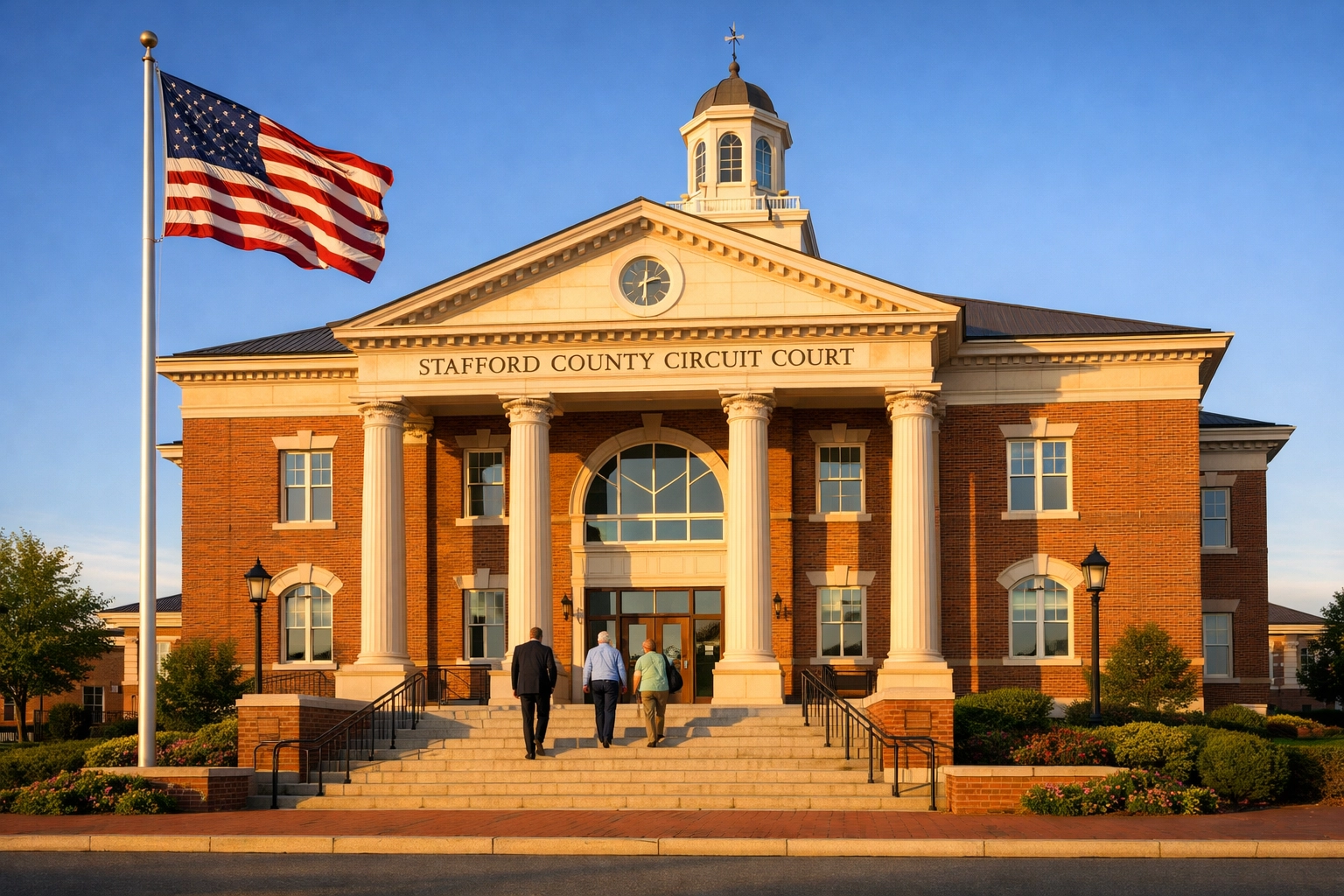
The Stafford County Circuit Court Clerk’s Office, located at 1302 Courthouse Road in Stafford, handles all divorce filings for the county.
Additionally, divorce lawyers stafford va track local submission practices, scheduling expectations, and courthouse-specific requirements so your filing is not delayed by preventable issues.
For example, Stafford County publishes general divorce filing information here: https://staffordcountyva.gov/government/courts/circuit_court/divorce.php (external link).
The Filing Process
You submit your Complaint for Divorce and supporting documents directly to the Clerk’s Office. You can file in person during business hours or work with an attorney who can file on your behalf.
The filing fee for a divorce in Stafford County varies based on the complexity of your case. Cases involving children typically have higher filing fees due to additional required documents.
Additionally, if you cannot afford the filing fee, you may request a fee waiver by submitting an Application to Proceed in Civil Case Without Payment of Fees or Costs. The court reviews these applications based on your income and expenses.
Obtaining a Case Number
Once you file your documents, the Clerk’s Office assigns a case number to your divorce. This number identifies your case throughout the entire proceeding.
You will use this case number on all future filings and correspondence with the court. Keep this number readily accessible for reference.
The Clerk’s Office maintains the official record of your case. All documents filed become part of the public court record unless sealed by court order.
Reason 4: Service of process is handled properly
After filing your Complaint, you must serve your spouse with copies of the divorce papers. Virginia law requires proper service to give the court jurisdiction over your spouse.
Additionally, divorce lawyers stafford va help ensure service is done correctly and documented properly, so you do not lose time repeating service or facing challenges later.
Service by Sheriff or Private Process Server
The most common method of service involves having the Stafford County Sheriff’s Office or a private process server personally deliver the documents to your spouse.
The server must hand the papers directly to your spouse and cannot simply leave them at their residence or place of employment. Personal service ensures your spouse receives actual notice of the divorce action.
However, the process server completes an affidavit confirming service, which is then filed with the court. This proof of service becomes part of the official case record.
Alternative Service Methods
If your spouse cannot be located for personal service, you may request permission from the court to use alternative service methods.
Service by publication involves placing a legal notice in a newspaper. This method requires court approval and is only permitted when you have made diligent efforts to locate your spouse.
Furthermore, if your spouse lives out of state, service can be accomplished by certified mail or by a process server in their jurisdiction. Virginia’s long-arm statute allows the court to exercise jurisdiction over non-resident spouses in certain circumstances.
Your Spouse’s Response Period
After being served, your spouse has 21 days to file a written response to your Complaint. This response is called an Answer.
In the Answer, your spouse can admit or deny the allegations in your Complaint and raise any defenses they may have. They can also file counterclaims requesting relief from the court.
Therefore, if your spouse fails to respond within 21 days, you may request a default judgment. The court may grant the divorce and the relief you requested without your spouse’s participation.

Reason 5: Settlement strategy keeps you in control
Most divorce lawyers stafford va recommend negotiating a comprehensive Property Settlement Agreement before proceeding to trial. This agreement resolves the major issues in your divorce and allows you to keep more control over the outcome.
Additionally, divorce lawyers stafford va can help you focus on terms that are enforceable and realistic, rather than terms that look good on paper but collapse in day-to-day life.
What a Property Settlement Agreement Covers
A thorough Property Settlement Agreement addresses every aspect of your divorce. The agreement must identify and divide all marital property, including real estate, vehicles, bank accounts, retirement accounts, and personal property.
Additionally, the agreement should address marital debt. Both parties must agree on who will be responsible for credit cards, loans, and other liabilities.
If one spouse is entitled to spousal support, the amount and duration should be clearly specified. Virginia courts generally enforce support provisions that both parties voluntarily agree to.
The Role of Full Financial Disclosure
Negotiating a valid Property Settlement Agreement requires complete financial transparency. Both spouses must provide full disclosure of all assets, debts, income, and expenses.
Hidden assets or intentional misrepresentation can result in the agreement being set aside. Courts take financial fraud seriously and may impose sanctions on parties who fail to disclose material information.
Furthermore, each party should exchange bank statements, tax returns, retirement account statements, and property appraisals. This documentation supports fair negotiation and prevents future disputes.
Making the Agreement Enforceable
For a Property Settlement Agreement to be enforceable, both parties must sign voluntarily and with full understanding of their rights. Courts scrutinize agreements for evidence of coercion or unfair advantage.
Each spouse should have adequate time to review the agreement and consult with legal counsel before signing. Rushed agreements signed under pressure may be challenged later.
Once signed, the agreement is filed with the court and incorporated into the Final Decree of Divorce. At that point, the agreement becomes a court order and is enforceable through contempt proceedings if either party violates its terms.
Reason 7: You have a plan for trial and for life after divorce
If you and your spouse cannot reach a complete agreement, your case proceeds through the Stafford County court system.
Therefore, having divorce lawyers stafford va on your side can help you prepare for the court timeline, gather evidence, and present a clear narrative to the judge if your case becomes contested.
Scheduling Your Case for Trial
Stafford County holds Term Days four times per year. During Term Day, divorce cases are placed on the court docket and trial dates are assigned.
Your divorce lawyer must attend Term Day to request a trial date for your case. The court typically schedules trials several months in advance due to the volume of cases.
However, cases are prioritized based on readiness and complexity. Contested divorces involving significant property or child custody disputes may receive earlier trial dates.
Mandatory Mediation Requirements
Before trial, the court may order both parties to participate in mediation. Mediation is a structured negotiation process facilitated by a neutral third party.
The mediator helps both spouses identify areas of agreement and work toward resolving disputed issues. Mediation allows parties to avoid the cost and stress of trial while maintaining control over the outcome.
Additionally, mediation can address issues that courts cannot resolve, such as specific parenting schedule details or division of sentimental personal property.
If mediation is successful, the parties sign a mediation agreement that is incorporated into the Final Decree of Divorce. If mediation fails, the case proceeds to trial as scheduled.
What Happens at Trial
Divorce trials in Stafford County typically last one to two days, depending on the complexity of the issues. Both parties present evidence and testimony to the judge, who makes all final decisions.
Virginia does not use juries in divorce cases. The judge has sole authority to determine property division, spousal support, child custody, and child support.
Therefore, each party has the opportunity to present witnesses, introduce documents, and cross-examine the other party’s witnesses. Rules of evidence apply, and testimony must be given under oath.
After hearing all evidence, the judge issues a Final Decree of Divorce. This decree legally ends the marriage and resolves all contested issues.

Reason 6: Child-related issues are addressed with less conflict
If you have minor children, your divorce must address custody, visitation, and child support through the Stafford Juvenile and Domestic Relations District Court (J&DR Court).
Additionally, divorce lawyers stafford va can help you create a workable parenting plan, prepare for custody hearings when needed, and avoid common mistakes that escalate conflict.
For example, Virginia’s Division of Child Support Enforcement provides public resources here: https://dss.virginia.gov/family/dcse/ (external link).
Legal Custody vs. Physical Custody
Virginia law distinguishes between legal custody and physical custody. Legal custody refers to the right to make major decisions about your child’s education, medical care, and religious upbringing.
Physical custody refers to where the child lives on a day-to-day basis. Courts can award sole physical custody to one parent or shared physical custody to both parents.
Furthermore, most courts prefer to award joint legal custody unless there are compelling reasons to limit one parent’s decision-making authority. Sole legal custody is typically reserved for cases involving abuse, neglect, or parental unfitness.
The Best Interests of the Child Standard
Stafford County courts apply Virginia’s statutory best interests factors when making custody decisions. These factors include the age and physical and mental condition of the child, each parent’s role in the child’s upbringing, and the child’s relationship with each parent.
Additionally, courts consider each parent’s willingness to support the child’s relationship with the other parent. A parent who attempts to alienate the child from the other parent may face negative custody consequences.
The court also considers any history of family abuse, the child’s needs, and each parent’s ability to meet those needs. No single factor is determinative.
Child Support Calculations
Virginia uses statutory guidelines to calculate child support obligations. The calculation considers both parents’ gross monthly incomes, work-related childcare costs, and health insurance premiums for the children.
The Stafford J&DR Court handles most child support matters. Support orders can be enforced through income withholding, contempt proceedings, and suspension of driver’s licenses or professional licenses for non-payment.
However, parents can agree to a child support amount different from the guidelines if the court finds the agreement is in the child’s best interests. Any agreement must be approved by the court to be enforceable.
Divorce lawyers stafford va and property division in Virginia
Virginia is an equitable distribution state, meaning marital property is divided fairly but not necessarily equally.
Additionally, divorce lawyers stafford va can help you identify what is marital versus separate, gather valuation documents, and negotiate division terms that reduce future disputes.
Identifying Marital vs. Separate Property
The first step in property division involves classifying all assets and debts as either marital or separate property. Marital property includes anything acquired during the marriage, regardless of whose name is on the title.
Separate property includes assets owned before marriage, inheritances received by one spouse, and gifts given specifically to one spouse. Separate property remains with the spouse who owns it.
Additionally, increases in value of separate property may be classified as marital property if the other spouse contributed to that increase. This hybrid property requires careful analysis.
Factors Affecting Property Distribution
Courts consider multiple factors when dividing marital property. The duration of the marriage affects distribution, with longer marriages typically resulting in more equal division.
Each spouse’s monetary and non-monetary contributions to the marriage are evaluated. Non-monetary contributions include homemaking and childcare responsibilities.
Therefore, courts also consider each spouse’s age, physical and mental condition, and how each party acquired the marital property. Fault in the breakup of the marriage can affect property distribution in certain cases.
Retirement Accounts and Real Estate
Retirement accounts earned during the marriage are marital property subject to division. Dividing these accounts requires a Qualified Domestic Relations Order (QDRO) to avoid tax penalties.
Real estate division often requires one spouse to refinance to remove the other spouse from the mortgage. Alternatively, the property can be sold and proceeds divided according to the court’s order.
Furthermore, the marital home presents unique challenges, especially when minor children are involved. Courts may award the home to the custodial parent to maintain stability for the children.
Spousal Support in Stafford County Divorces
Spousal support, also called alimony, is not automatic in Virginia divorces. The court evaluates whether support is appropriate based on statutory factors.
Types of Spousal Support
Virginia recognizes several types of spousal support. Temporary support may be awarded during the pendency of the divorce to maintain the status quo.
Rehabilitative support is designed to help a spouse become self-supporting through education or job training. This support is typically limited in duration.
Additionally, permanent support may be awarded in long-term marriages where one spouse lacks the ability to become self-supporting due to age, disability, or other factors.
Factors Courts Consider
Courts evaluate the standard of living established during the marriage and each spouse’s earning capacity. A spouse who sacrificed career opportunities to support the family may be entitled to support.
The duration of the marriage significantly affects support awards. Short marriages rarely result in substantial support obligations.
Therefore, courts also consider each spouse’s age, physical and mental condition, and contributions to the marriage. Fault in the breakup of the marriage can affect the amount and duration of support.
Modifying Support Orders
Spousal support orders can be modified if there is a material change in circumstances. Loss of employment, disability, or the recipient spouse’s cohabitation with a new partner may justify modification.
However, support provisions in a Property Settlement Agreement are generally not modifiable unless the agreement specifically allows modification.

After the Final Decree: Post-Divorce Considerations
Receiving your Final Decree of Divorce does not end all legal obligations related to your former marriage.
Implementing the Decree’s Terms
You must comply with all provisions of the Final Decree, including transferring property, refinancing mortgages, and dividing retirement accounts.
Property transfers should be completed promptly to avoid future disputes. Real estate transfers require new deeds to be prepared and recorded with the Stafford County Clerk’s Office.
Additionally, you should update beneficiary designations on life insurance policies, retirement accounts, and bank accounts. These designations are not automatically changed by divorce.
Name Changes
If you wish to return to a maiden name or previous name, this can be accomplished through the divorce decree. The decree should specifically grant the name change.
After the name change is granted, you must update your driver’s license, Social Security card, passport, and other official documents. The Final Decree serves as proof of your legal name change.
Enforcing the Decree
If your former spouse fails to comply with the terms of the Final Decree, you can file a motion for contempt with the Stafford County Circuit Court.
Contempt proceedings can result in fines, attorney’s fees, and even jail time for willful violations of court orders. Courts take enforcement seriously and expect both parties to comply fully with decree provisions.
Frequently Asked Questions
How long does the divorce process take in Stafford County?
The timeline depends on your circumstances. Uncontested cases with a signed agreement may be finalized shortly after the separation period ends, while contested cases can take longer due to discovery, motion hearings, and court scheduling. Additionally, divorce lawyers stafford va can help you set realistic expectations and avoid delays caused by preventable filing or service issues.
Do I need divorce lawyers stafford va for an uncontested divorce?
Not every case requires representation, but many people choose divorce lawyers stafford va even when they agree on the big issues. Additionally, an attorney can help confirm your agreement is complete, enforceable, and consistent with Virginia requirements, so you reduce the risk of re-filing or future disputes.
What should I do before I file if I am separated but still living nearby?
You should document the separation date, keep finances as organized as possible, and avoid conduct that creates confusion about whether you resumed the relationship. Furthermore, divorce lawyers stafford va can help you identify what facts matter and how to keep clean records that support your filing.
Can I file for divorce in Stafford if my spouse lives in another state?
Yes, if you meet Virginia’s six-month residency requirement. Virginia courts can exercise jurisdiction over your divorce even if your spouse lives elsewhere. However, service of process and enforcement of orders may be more complex when your spouse resides out of state. Additionally, divorce lawyers stafford va can help you plan for out-of-state service and avoid technical issues.
What if my spouse refuses to sign a separation agreement?
You are not required to have a signed separation agreement to obtain a divorce. If your spouse refuses to negotiate, you can proceed to trial and allow the court to decide contested issues. However, reaching an agreement often saves time and reduces conflict. Therefore, divorce lawyers stafford va often focus first on negotiation strategies that are realistic for your situation.
Do I have to go to court for an uncontested divorce?
In most cases, yes. At minimum, one party must prove the grounds for divorce. Some uncontested divorces can be finalized through written testimony in certain situations, but availability depends on local practice and the case facts. Additionally, divorce lawyers stafford va can advise whether your case is a fit for a streamlined process.
How is debt divided in a Stafford County divorce?
Marital debt is subject to equitable distribution like marital assets. The court considers how the debt was incurred, whether it benefited the marriage, and each spouse’s ability to pay. However, creditors are not bound by divorce decrees and can still pursue either spouse for joint debts. Furthermore, divorce lawyers stafford va can help you negotiate protections, including refinance or payoff timelines when possible.
Can I modify child custody after the divorce is final?
Yes, but only if there has been a material change in circumstances affecting the child’s best interests. The party seeking modification must prove that circumstances have changed substantially since the original order. Additionally, divorce lawyers stafford va can help you evaluate whether your situation meets that legal threshold before you file.
What happens if my ex-spouse stops paying child support?
Virginia offers enforcement tools, and the Division of Child Support Enforcement may help with collection in many situations. Remedies can include wage withholding and court enforcement actions. However, your best option depends on the facts of your order and where the case is pending. Therefore, divorce lawyers stafford va can help you choose the fastest path to enforcement.
How does adultery affect my divorce case in Stafford County?
Adultery is a fault-based ground that can impact spousal support and sometimes property division. Proving adultery requires a strong factual record, and it can also increase conflict and cost. Additionally, divorce lawyers stafford va can explain whether a fault-based approach supports your goals or whether a no-fault strategy is safer.
Can grandparents get visitation rights during a divorce?
Virginia law allows grandparents to petition for visitation in certain circumstances. Courts focus on the child’s best interests and the existing family relationships. Additionally, divorce lawyers stafford va can help you understand how third-party visitation requests may affect your case.
What is the difference between legal separation and divorce in Virginia?
Virginia does not recognize legal separation as a separate court status. People use “separation” to mean living separate and apart while still married. Only divorce ends the marriage and allows remarriage. Furthermore, divorce lawyers stafford va can help you understand what behaviors can undermine separation in the eyes of the court.
Can I file for divorce in Stafford if my spouse lives in another state?
Yes, if you meet Virginia’s six-month residency requirement. Virginia courts can exercise jurisdiction over your divorce even if your spouse lives elsewhere. However, service of process and enforcement of orders may be more complex when your spouse resides out of state.
What if my spouse refuses to sign a separation agreement?
You are not required to have a signed separation agreement to obtain a divorce. If your spouse refuses to negotiate, you can proceed to trial and allow the court to decide all contested issues. However, reaching an agreement saves time and money compared to litigation.
Do I have to go to court for an uncontested divorce?
In most cases, yes. At minimum, one party must testify at a final hearing to prove the grounds for divorce. Some uncontested divorces can be finalized without a full hearing through affidavit testimony, but this option is not available in all cases.
How is debt divided in a Stafford County divorce?
Marital debt is subject to equitable distribution just like marital assets. The court considers which spouse incurred the debt, whether it benefited the marriage, and each spouse’s ability to pay. However, creditors are not bound by divorce decrees and can still pursue either spouse for joint debts.
Can I modify child custody after the divorce is final?
Yes, but only if there has been a material change in circumstances affecting the child’s best interests. The party seeking modification must prove that circumstances have changed substantially since the original custody order was entered.
What happens if my ex-spouse stops paying child support?
The Stafford County Division of Child Support Enforcement can help with collection. Remedies include wage withholding, tax refund interception, suspension of driver’s licenses, and contempt proceedings that can result in jail time for willful non-payment.
How does adultery affect my divorce case in Stafford County?
Adultery is a fault-based ground that can impact spousal support and property division. If adultery is proven, the court may bar the adulterous spouse from receiving spousal support and may award a larger share of marital property to the innocent spouse. Proving adultery requires clear and convincing evidence.
Can grandparents get visitation rights during a divorce?
Virginia law allows grandparents to petition for visitation in certain circumstances. If one parent is deceased, is incarcerated, or has had parental rights terminated, grandparents may seek court-ordered visitation. The court evaluates whether visitation serves the child’s best interests.
What is the difference between legal separation and divorce in Virginia?
Virginia does not recognize legal separation as a formal legal status. When people refer to separation in Virginia, they mean living separate and apart while still legally married. Only divorce legally ends the marriage and allows both parties to remarry.
Working with Shawna L. Stevens PLLC on Your Stafford Divorce
Divorce represents one of life’s most challenging transitions. The decisions you make during this process affect your financial security, your relationship with your children, and your future well-being.
Shawna L. Stevens has represented clients throughout the Fredericksburg area, including Stafford County, for more than 20 years. Her practice focuses on Virginia family law, giving her deep knowledge of how local courts handle divorce cases.
Therefore, when you work with our firm, you receive personalized attention throughout your case. We take time to understand your unique situation, your priorities, and your concerns about the future.
Our approach combines compassionate guidance with strategic advocacy. We help you understand your rights under Virginia law and develop a customized strategy designed to achieve your goals.
Additionally, if you are comparing divorce lawyers stafford va, it often helps to choose a team that is responsive and direct about next steps. We handle all aspects of your case, from drafting your initial Complaint through negotiating settlements and representing you at trial if necessary.
You can also learn more about our divorce representation here: Divorce.
At Shawna L. Stevens PLLC, we have spent over 20 years guiding families through the complexities of Virginia law. Don’t leave your future to chance or generic advice. Contact us directly at (540) 310-4088 or visit our contact page to schedule a consultation and develop a personalized strategy for your case.