
If you are facing the possibility of a divorce in Stafford, Virginia, the path forward may feel overwhelming and uncertain. Deciding to end a marriage involves complex legal procedures, emotional transitions, and significant financial decisions that will affect your life for years to come. Finding a dedicated divorce lawyer in Stafford VA is a critical step toward protecting your rights and securing your future.
The legal process in Virginia is distinct, requiring specific grounds for divorce and adhering to strict procedural rules. Whether you are dealing with a simple uncontested matter or a high conflict case involving assets and children, understanding the timeline and requirements of the Stafford County Circuit Court is essential. This guide outlines the necessary steps to navigate the divorce process with confidence and clarity.
By working with an experienced attorney, you can ensure that your property is divided fairly, your parental rights are upheld, and your legal documents are filed correctly. Shawna L. Stevens has spent more than two decades helping local residents navigate these transitions with both compassion and legal precision. Families throughout the Fredericksburg region, from Stafford and Spotsylvania to King George, Caroline, Orange, and Westmoreland, have relied on Shawna L. Stevens PLLC for over 20 years.
1. Choosing the Right Grounds for Divorce in Stafford VA
Virginia law requires every person filing for divorce to state a specific legal reason, known as grounds, for ending the marriage. Under Va. Code Section 20-91, you may file for divorce based on no-fault separation or specific fault grounds such as adultery, cruelty, or desertion.
Understanding No-Fault Separation Periods
Most divorces in Stafford are filed on the ground of living separate and apart for a continuous period. If you and your spouse have minor children, you must live separately for at least one full year before you can file for a no-fault divorce. If you do not have minor children and you have signed a written property settlement agreement, this waiting period is reduced to six months. This requirement is absolute and cannot be waived by the court or by agreement between the parties.
Filing Based on Fault Grounds
Fault grounds allow a party to file for divorce based on the misconduct of their spouse. Adultery, cruelty, and desertion are the most common fault grounds used in Virginia. While filing on fault grounds can sometimes eliminate the waiting period for filing, it also increases the complexity and cost of the case. You must provide clear and convincing evidence of the misconduct, which often involves hiring private investigators or gathering extensive digital evidence.
How Ground Selection Impacts Your Timeline
The grounds you choose will directly dictate how quickly your case moves through the Stafford County Circuit Court. A no-fault divorce with a signed agreement is generally the fastest route to a final decree. However, if fault is alleged, the litigation can extend for many months as both sides gather evidence to prove or disprove the claims. Selecting the right ground is a strategic decision that should be made after a confidential consultation with a qualified divorce lawyer in Stafford VA.
2. Filing Your Complaint at the Stafford County Circuit Court
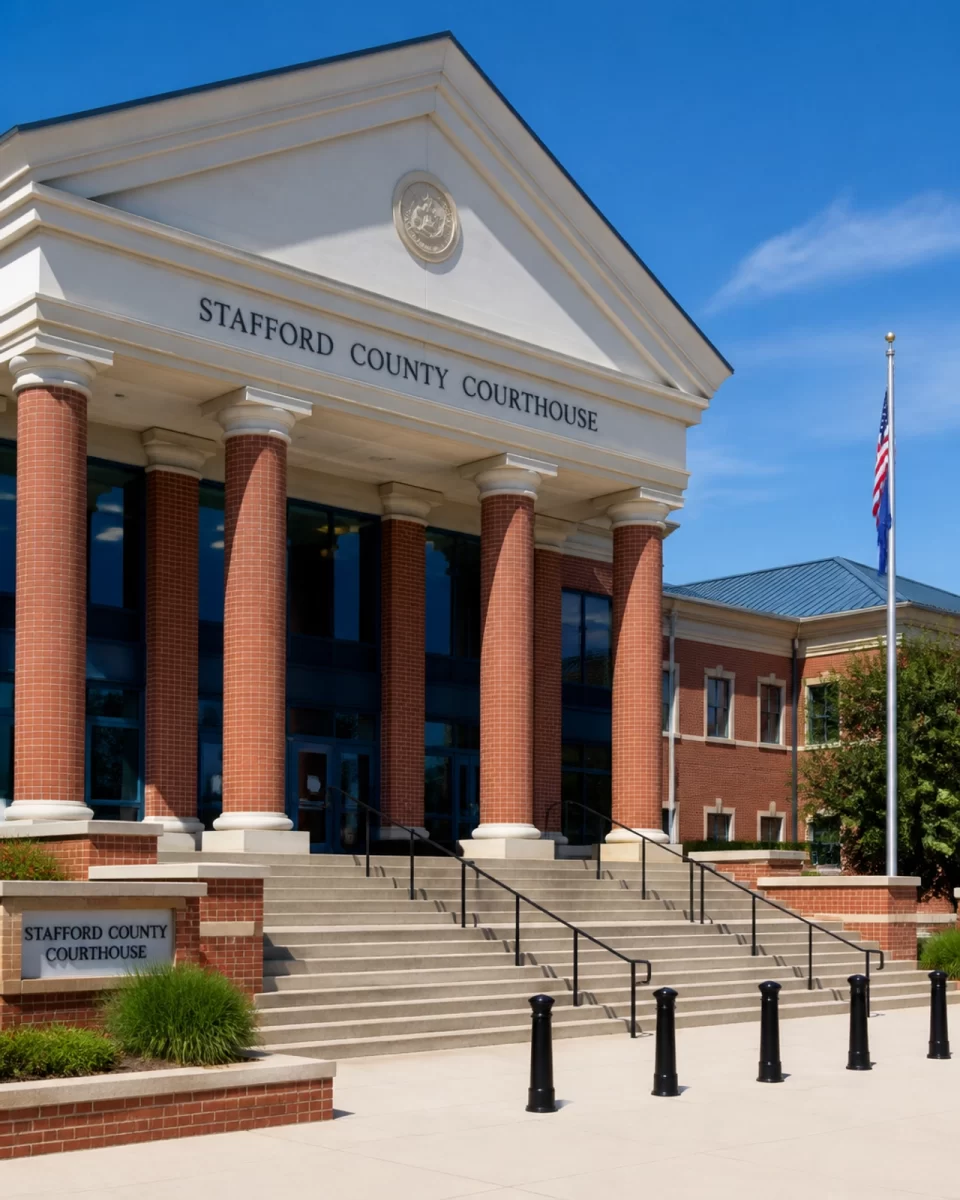
The formal divorce process begins when one spouse files a Complaint for Divorce with the clerk of the circuit court. In Stafford County, this filing must take place at the Stafford County Circuit Court located at 1300 Courthouse Road, Stafford, VA 22554.
Necessary Documents for the Initial Filing
When you initiate your case, you must submit a Complaint for Divorce that outlines the details of your marriage, the names and ages of any children, and the grounds upon which you are seeking the divorce. Additionally, you must file a VS-4 form, which is a state statistical form required by the Department of Health. If there are minor children involved, you may also need to file an affidavit regarding their residency to satisfy jurisdictional requirements.
The Role of the Stafford County Circuit Court Clerk
The Clerk of the Court is responsible for maintaining the official record of your case and issuing the summons that will be served on your spouse. While the clerk's office can provide information about filing fees and court schedules, they cannot provide legal advice. Ensuring that every document is formatted correctly according to local rules is the responsibility of your attorney. Shawna L. Stevens PLLC regularly handles filings in Stafford and ensures that all procedural requirements are met to avoid unnecessary delays.
Associated Fees and Costs for Filing
Filing a divorce case requires the payment of a filing fee, which typically ranges around $86 but can vary based on the number of pages in your complaint and whether you are requesting additional services. There are also fees for service of process, which is the official delivery of papers to your spouse. Understanding these costs upfront helps you plan your budget as you begin the legal process.
3. Navigating Service of Process and the Initial Response
Once the complaint is filed, it must be officially delivered to your spouse to provide them with legal notice of the proceedings. This step, known as service of process, is a fundamental requirement of due process in the Virginia legal system.
Methods for Serving Divorce Papers in Stafford
In Stafford County, service is typically performed by the Stafford County Sheriff's Office or a private process server. If your spouse is cooperative, they may sign an Acceptance of Service and Waiver of Notice, which simplifies the process and avoids the need for a sheriff to visit their home or workplace. However, if your spouse is evasive, your attorney may need to seek alternative methods, such as service by publication, which requires a specific court order.
The Importance of the 21 Day Response Period
After being served with the summons and complaint, the defendant has 21 days to file a formal response with the court. This response, often called an Answer or a Counter-complaint, allows the other spouse to admit or deny the allegations and raise their own claims for relief. If no response is filed within this timeframe, the plaintiff may be able to proceed by default, though specific procedural safeguards still apply in divorce cases.
What Happens if Your Spouse Cannot be Located
If you are unable to find your spouse after diligent efforts, Virginia law provides a process for service by order of publication. This involves publishing a notice in a local newspaper for a set number of weeks. While this allows the divorce to move forward, it can limit the court's ability to rule on certain financial matters like spousal support or property division if the court does not have personal jurisdiction over the missing spouse.
4. Managing Discovery and Financial Evidence Collection
Discovery is the formal process of exchanging information and documents between spouses to ensure that all marital assets and debts are identified and valued. This stage is critical for achieving a fair result in equitable distribution under Va. Code Section 20-107.3.
Mandatory Disclosures and Equitable Distribution
Virginia follows the principle of equitable distribution, meaning the court divides marital property based on what is fair, which is not always an exact 50/50 split. To determine what is fair, both parties must disclose their income, bank statements, tax returns, and real estate appraisals. This transparency is necessary to ensure that one spouse does not hide assets or undervalue marital property.
How Retirement and Pensions are Handled in Stafford
Retirement accounts, such as 401ks, IRAs, and military pensions, are often the most valuable assets in a Stafford divorce. Because Stafford is home to many military families and federal employees, calculating the marital portion of these accounts requires specialized knowledge. A portion of a pension earned during the marriage is generally considered marital property, even if the account is held in only one spouse's name.
Protecting Your Separate Property Assets
Property you owned before the marriage, or property received as an individual gift or inheritance, is usually classified as separate property. However, separate property can become marital or hybrid property if it is commingled with marital funds. Shawna L. Stevens (VSB No. 65992) has more than 20 years of Virginia family law experience and helps clients trace their separate assets to ensure they are protected during the division process.
5. Fulfilling the Virginia Corroborating Witness Requirement
A unique aspect of Virginia divorce law is the requirement for a corroborating witness, even in cases where both spouses agree to the divorce. You cannot get divorced based on your testimony alone; someone else must verify the facts of your separation.
Why Virginia Requires a Corroborating Witness
The purpose of the corroborating witness is to prevent collusion between spouses and to ensure that the legal requirements for divorce are actually met. The witness must be able to testify from personal knowledge that the parties have lived separate and apart without cohabitation for the duration of the required waiting period. This testimony confirms to the judge that the court has the legal authority to grant the divorce.
Who Qualifies to be Your Witness
A corroborating witness can be a friend, a family member, or even a neighbor who has visited your home and can confirm your separate living arrangements. The witness does not need to have been present every single day, but they must have enough personal interaction with you to speak confidently about your lifestyle during the separation. In many uncontested cases, this testimony is provided via a written deposition or affidavit rather than a live court appearance.
The Difference Between Ore Tenus and Affidavits
In Stafford County, the court may allow testimony to be presented ore tenus, which means orally in front of a judge, or through written affidavits. Ore tenus hearings are often brief and are scheduled once all other paperwork is in order. Using written affidavits can be more convenient for the witness, but it requires precise drafting to ensure that all legal elements are covered according to the court's expectations.
6. Securing and Entering the Final Decree of Divorce
The final step in the process is the entry of the Final Decree of Divorce, which is the official court order that legally ends your marriage. This document is the culmination of all the previous steps and outlines the final rulings on property, support, and custody.
The Final Hearing Process in Stafford County
If your case is uncontested, the final hearing is often a procedural formality to review the paperwork and ensure everything is in order. If the case is contested, the final hearing is a trial where the judge hears evidence and makes decisions on disputed issues. Once the judge is satisfied that the grounds for divorce have been proven and the terms are fair, they will sign the decree.
Incorporating Your Separation Agreement
If you and your spouse have signed a property settlement agreement or a separation agreement, that document is usually incorporated into the Final Decree. This makes the terms of your agreement an enforceable court order. If one party fails to follow the terms of the agreement after it is incorporated, the other party can file a petition for show cause or contempt of court to enforce compliance.
Understanding the Appeal Period
Once the Final Decree is entered by the Stafford County Circuit Court, there is a 30 day period during which either party can file an appeal to the Court of Appeals of Virginia. During this time, the order is final but remains subject to being overturned if a legal error occurred. Most parties wait until this 30 day period has passed before considering themselves fully free to remarry or make significant financial changes based on the decree.
Local Courthouse Information for Stafford Residents
Navigating the legal system requires knowing exactly where to go and how the local court operates. The Stafford County Circuit Court is the primary venue for all divorce matters in the county.
Stafford County Circuit Court
Address: 1300 Courthouse Road, Stafford, VA 22554
Phone: (540) 658-8750
Hours: 8:00 AM to 4:30 PM, Monday through Friday
The courthouse is located near the intersection of Jefferson Davis Highway and Courthouse Road. It is part of a larger government complex that also houses the Juvenile and Domestic Relations District Court, which may handle preliminary matters related to child custody and support before a divorce is filed. As a Fredericksburg family law attorney with over two decades of local court experience, Shawna L. Stevens appears regularly in Stafford County Circuit Court and is familiar with the local procedures and personnel.
Frequently Asked Questions
How long does a divorce take in Stafford County?
The timeline for a divorce in Stafford County depends on whether the case is contested or uncontested. An uncontested divorce with a signed separation agreement can often be completed in two to four months after the initial filing. Contested cases that require discovery and a full trial typically take twelve to eighteen months or longer to reach a final resolution.
Do I have to go to court for an uncontested divorce in Stafford?
Stafford County often allows uncontested divorces to be finalized through the submission of written affidavits and a proposed Final Decree without the need for a live hearing. However, the court reserves the right to require an ore tenus hearing if the judge has questions about the paperwork or the terms of the agreement.
How is property divided in a Stafford Virginia divorce?
Property is divided according to the principles of equitable distribution defined in Va. Code Section 20-107.3. The court classifies all assets as marital, separate, or hybrid and then considers factors such as the duration of the marriage and the contributions of each spouse to determine a fair division. Shawna L. Stevens PLLC helps clients identify all marital assets to ensure a comprehensive and fair property settlement.
Can I get a divorce if my spouse refuses to sign the papers?
You can still obtain a divorce in Virginia even if your spouse refuses to sign the papers. By filing a contested complaint and serving your spouse with a summons, you initiate a legal process that your spouse cannot stop simply by refusing to cooperate. If they fail to respond, the court can eventually grant a divorce by default.
What is the cost of hiring a divorce lawyer in Stafford VA?
The cost of legal representation varies significantly based on the complexity of the issues and whether the parties are able to reach an agreement. Uncontested matters generally involve a predictable fee structure, while contested litigation is billed based on the time and resources required for discovery and trial. The best way to understand the potential costs of your case is to schedule a confidential consultation.
How does the court determine child custody in Stafford?
Stafford courts determine custody based on the best interests of the child as outlined in Va. Code Section 20-124.3. The judge considers factors such as the age and health of the child, the relationship between each parent and the child, and the ability of each parent to support the child's contact with the other parent.
Conclusion
Navigating a divorce is a significant life event that requires both legal expertise and emotional resilience. By following the steps outlined in this guide and seeking professional guidance, you can move through the process with the assurance that your rights are being protected. The Stafford County Circuit Court has specific rules and expectations that must be met to achieve a successful outcome.
With more than 20 years of experience in Virginia family law, Shawna L. Stevens provides the personalized strategy and compassionate representation needed for these difficult times. Shawna L. Stevens PLLC serves families across all seven counties of the Fredericksburg region: Fredericksburg, Stafford, Spotsylvania, King George, Caroline, Orange, and Westmoreland. Every family law matter is different, and the best way to understand what your case may involve is to schedule a confidential consultation with our office.
If you have questions about your specific situation, Shawna L. Stevens is here to help. Contact our Fredericksburg office to schedule a confidential consultation at (540) 310-4088. The firm's office is located at 307 Lafayette Boulevard, Suite 200, Fredericksburg VA 22401.
Going through a divorce in the Fredericksburg area? With more than 20 years of experience in Virginia family law, Shawna L. Stevens can help. Learn more from an experienced divorce lawyers in Fredericksburg VA or call (540) 310-4088 to schedule a confidential consultation.