
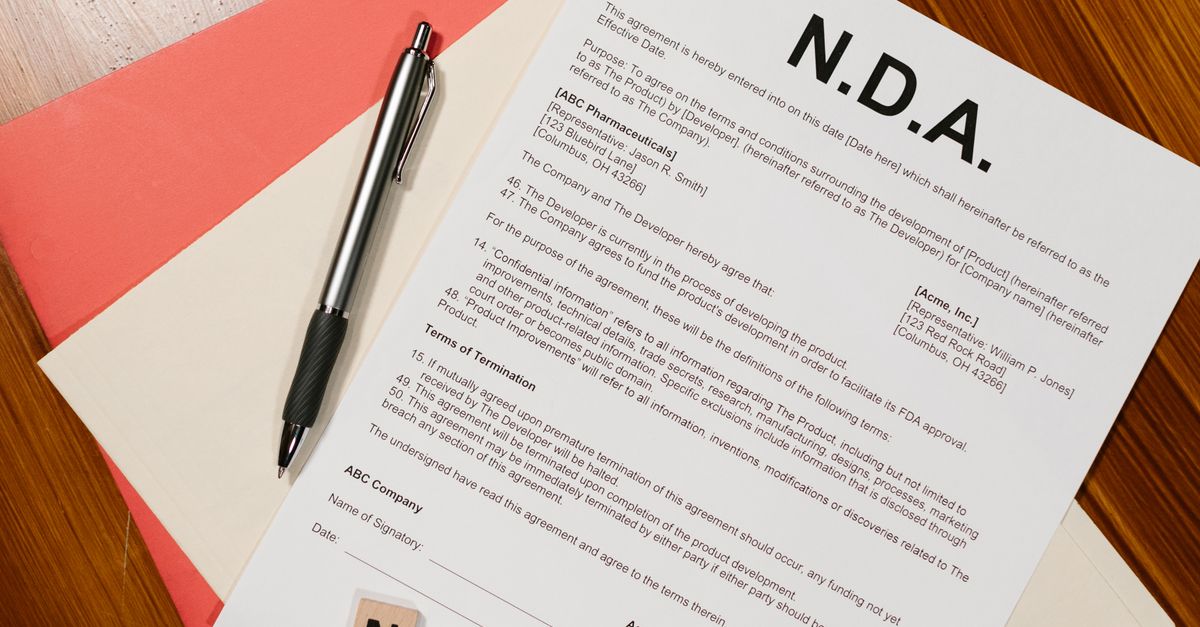
A Virginia postnuptial agreement can be enforceable when it is properly drafted, voluntarily signed, and structured within the rules set by Virginia marital agreement law. For many married couples, a postnuptial agreement in Virginia is used to clarify property rights, address debt, define expectations for spousal support, or protect separate assets after major life or financial changes.
Yes, a Virginia postnuptial agreement can be enforceable. Under Va. Code Section 20-155, married persons may enter into marital agreements that settle rights and obligations to the same extent as prospective spouses, and those agreements are effective immediately upon execution. Enforcement can still be challenged under Va. Code Section 20-151 if a spouse proves the agreement was not voluntary or was unconscionable at the time of execution together with inadequate financial disclosure and no written waiver.
What Is a Postnuptial Agreement in Virginia?
A Virginia postnuptial agreement is a contract signed after a couple is already married. It is sometimes called a marital agreement Virginia couples use to organize financial rights and responsibilities during marriage or in the event of separation, divorce, or death.
Unlike a prenuptial agreement, which is signed before the wedding, a post nuptial agreement Virginia couples use becomes relevant after the marriage has already begun. That timing matters because the spouses may be responding to real-life developments rather than trying to predict future possibilities.
Common reasons couples use a postnuptial agreement include:
- one spouse receives an inheritance
- one spouse starts or buys into a business
- the couple wants to define separate and marital property more clearly
- one spouse takes on substantial debt
- a spouse leaves work to care for children or family members
- the couple wants a financial reset after a period of marital strain
- the spouses want more certainty about spousal support or property division if the marriage later ends
In Fredericksburg and the surrounding region, these agreements often arise after practical life changes, not just high-asset events. A couple may want better records, clearer expectations, or a more structured plan for handling property and support issues before conflict grows.
Is a Virginia Postnuptial Agreement Legal?
Yes. Virginia law recognizes marital agreements between married persons. The main statute is Va. Code Section 20-155, which states that married persons may enter into agreements with each other to settle rights and obligations to the same extent as prospective spouses may do under the Premarital Agreement Act.
That section matters for several reasons.
First, it confirms legality. Married couples are not limited to oral understandings or informal household arrangements. Virginia law allows them to create enforceable marital contracts.
Second, a marital agreement under Section 20-155 is effective immediately upon execution. That is one of the biggest differences between a postnup vs prenup analysis. A prenup is generally signed before marriage and becomes effective upon marriage, while a postnuptial agreement takes effect once properly executed because the couple is already married.
Third, Section 20-155 recognizes limited circumstances in which an agreement reflected in a court order endorsed by counsel or the parties, or recorded and transcribed on the record and affirmed personally by the parties, need not be in writing. In everyday planning, however, a carefully written and signed agreement remains the practical standard.
The same statute also provides that if the parties reconcile after entering a separation or property settlement agreement, that reconciliation abrogates the agreement unless the agreement itself states otherwise. That point can be important when spouses sign documents during a difficult period but later resume the marriage.
What Can a Postnuptial Agreement Cover in Virginia?
Virginia law allows broad financial planning in a marital agreement. Under Va. Code Section 20-150, parties may contract with respect to a wide range of subjects.
These permissible subjects include:
- rights and obligations in any property of either or both spouses, whenever and wherever acquired or located
- the right to buy, sell, manage, control, transfer, exchange, lease, consume, spend, assign, create security interests in, mortgage, encumber, dispose of, or otherwise control property
- the disposition of property upon separation, dissolution of marriage, death, or another event
- modification or elimination of spousal support
- the making of a will, trust, or other arrangement to carry out the agreement
- ownership rights in and disposition of the death benefit from a life insurance policy
- choice of law governing construction of the agreement
- any other matter, including personal rights and obligations, that does not violate public policy or a criminal statute
For many couples, the most useful terms involve property classification, debt allocation, and spousal support planning. A postnuptial agreement may identify what stays separate, what will be considered marital, how future appreciation will be treated, or how a closely held business interest should be handled.
For example, a spouse who owns real estate before marriage may want to clarify how mortgage payments, refinance activity, renovations, rental income, or future sale proceeds will be characterized. A business owner may want to address ownership, appreciation, management control, or treatment of retained earnings. A couple may also want to coordinate marital agreement terms with estate planning documents and beneficiary designations.
The Child Custody and Child Support Carve-Out
A postnuptial agreement cannot override the court's authority over child custody or child support. Even though parents can discuss future intentions, Virginia courts retain authority to decide custody and support issues based on the child's best interests and the governing law in effect when the issue is before the court.
That means a marital agreement may help organize adult financial rights, but it cannot finally decide child support or custody in a way that binds the court. If a clause attempts to limit a child's right to support or predetermine custody regardless of future circumstances, a court is not required to enforce that clause.
This distinction is critical for anyone asking, are postnuptial agreements enforceable in virginia. The answer is often yes as to valid financial terms between spouses, but not as to provisions that intrude on the court's continuing role in matters involving children.

What Formal Requirements Apply?
Formal requirements matter. Virginia marital agreements are much easier to defend when the document is drafted with the statutory rules in mind and supported by clear financial disclosure and careful execution procedures.
Writing and Signature Requirements Under Va. Code Section 20-149
Va. Code Section 20-149 provides that a premarital agreement must be in writing and signed by both parties. It is enforceable without consideration and becomes effective upon marriage. For postnuptial agreements, Section 20-155 imports the same effect and conditions, except that the agreement becomes effective immediately upon execution because the marriage already exists.
In practical terms, a Virginia postnuptial agreement should generally be:
- in writing
- signed by both spouses
- clear enough to identify the property, rights, obligations, and intended effect of the agreement
- executed in circumstances that show both spouses acted knowingly and voluntarily
Virginia law does not require consideration in the traditional contract sense for enforceability. That is important because many spouses assume a contract must involve a quid pro quo exchange to be valid. Under the statutory framework, the absence of separate consideration does not by itself defeat the agreement.
Is Notarization Required?
Virginia's statutes focus on writing and signatures, not notarization. Even so, notarization is still a strong best practice because it can reduce later disputes about authenticity and execution. It can also help if the agreement may later be presented in court or used alongside property transfers or estate documents.
Why Independent Review Helps
The statutes do not require each spouse to have a separate lawyer, but separate legal review can help protect the integrity of the agreement. A challenge becomes harder when the record shows each spouse had time to review the document, ask questions, consider disclosure materials, and sign without pressure.
When Can a Postnuptial Agreement Be Challenged?
The most important enforcement rule appears in Va. Code Section 20-151. Although the section is written in terms of premarital agreements, Section 20-155 extends the same effect and conditions to marital agreements.
Under Section 20-151, a party challenging enforcement must prove one of the recognized grounds.
1. The Agreement Was Not Executed Voluntarily
A postnuptial agreement is not enforceable if the spouse against whom enforcement is sought proves that the agreement was not executed voluntarily. Voluntariness is highly fact-specific. Pressure, intimidation, or a lack of meaningful choice can become important issues.
Examples that may create litigation risk include:
- presenting a finished agreement with little or no time for review
- threatening immediate financial harm unless the other spouse signs
- using misleading statements about the content of the document
- signing under conditions that suggest coercion rather than informed consent
A difficult conversation or emotional tension does not automatically make an agreement involuntary. The question is whether the challenging spouse can prove the execution was not truly voluntary.
2. The Agreement Was Unconscionable at the Time of Execution and Disclosure Rules Were Not Met
Section 20-151 also allows a challenge if the agreement was unconscionable when executed and, before execution, the challenging spouse:
- was not provided a fair and reasonable disclosure of the property or financial obligations of the other spouse, and
- did not voluntarily and expressly waive, in writing, any right to disclosure beyond the disclosure that was provided
These elements work together. A spouse generally must prove both unconscionability at execution and the related disclosure failure or absence of written waiver.
The statute also states that an issue of unconscionability is to be decided by the court as a matter of law. In addition, recitations in the agreement create a prima facie presumption that the stated facts are true. Those recitals often address voluntary execution, opportunity for review, disclosure, and the parties' understanding of the agreement.
What Does Financial Disclosure Mean?
Fair and reasonable disclosure usually means the spouses exchange enough information about assets, debts, and financial obligations for each person to understand the basic economic picture before signing.
That often includes:
- real estate
- bank and investment accounts
- retirement assets
- business interests
- personal property of significant value
- outstanding loans and credit obligations
- support obligations to others
- anticipated inheritances or other relevant financial interests when appropriate
In Fredericksburg-area cases, disclosure problems often arise not because a spouse intended fraud, but because the schedules were vague, incomplete, or outdated. Precision matters.
How Can a Postnuptial Agreement Be Amended or Revoked?
A postnuptial agreement is not something one spouse can casually rewrite later. Under Va. Code Section 20-153, after marriage, an agreement may be amended or revoked only by a written agreement signed by both parties, and the amendment or revocation is enforceable without consideration.
That means:
- oral changes are risky and generally insufficient
- informal text messages or assumptions are poor substitutes for a signed written amendment
- both spouses must agree to the revised terms
- a later written amendment should be as careful and specific as the original agreement
If a couple's finances change significantly, such as through a home purchase, sale of a business, inheritance, or retirement planning shift, it may make sense to review whether the existing agreement still matches the couple's goals.
Postnup vs Prenup: What Is the Difference?
The phrase postnup vs prenup describes a timing difference, but the practical differences often go further.
Prenup
A prenuptial agreement is signed before marriage. Under Section 20-149, it becomes effective upon marriage. Couples often use prenups when they want to establish financial expectations before combining households or acquiring marital property.
For more background, see the firm's prenuptial and postnuptial agreement resource.
Postnup
A postnuptial agreement is signed after the marriage has already begun. Under Section 20-155, it becomes effective immediately upon execution. Couples often use a postnuptial agreement Virginia plan after a financial event, inheritance, business change, marital reconciliation, or major shift in responsibilities.
Separation Agreement
A separation agreement is different from both because it is usually created when the spouses are separating or already separated and want to resolve the terms of that separation. It often covers property division, support, debt, and if applicable, custody and child-related terms subject to court oversight.
For a related overview, see the firm's separation agreements resource.
In other words:
- prenup = before marriage
- postnup = during marriage
- separation agreement = during or after separation, often in anticipation of divorce
How Postnuptial Agreements Interact With Divorce Issues
A strong Virginia postnuptial agreement often intersects with other major family law subjects.
Property terms may shape how spouses approach equitable distribution. For related reading, see the firm's property division resource.
Spousal support clauses may also affect later litigation or negotiation, depending on the language used and whether the clause is enforceable. For more on that topic, see the firm's spousal support resource.
This is one reason clarity matters. A vague marital agreement can create as many problems as it solves. If a clause does not clearly define separate property, address appreciation, explain responsibility for debt, or spell out support terms, a dispute may still arise later over interpretation.
Common Situations Where a Virginia Postnuptial Agreement May Help
A postnuptial agreement is not only for ultra-high-net-worth couples. It can be useful whenever spouses want more certainty than the default rules provide.
Common examples include:
Protecting Separate Property
A spouse may want to better protect premarital assets, inheritances, family gifts, or business interests from later classification disputes.
Managing Debt Exposure
If one spouse has business debt, tax issues, credit problems, or a pattern of significant spending, the couple may want to define responsibility more clearly.
Clarifying Expectations After Reconciliation
Some couples consider a marital agreement after working through a period of separation or financial disruption. In that context, the agreement can serve as a structured reset with documented expectations.
Coordinating With Estate Planning
A marital agreement can work alongside wills, trusts, and beneficiary designations, particularly when spouses are blending families, preserving assets for children from prior relationships, or trying to avoid later disputes.
Why Careful Drafting Matters
A postnuptial agreement can be valid under Virginia law without being wise in its wording. That is why drafting quality matters.
Poorly written agreements often fail because they:
- use vague terms instead of precise asset descriptions
- omit debt schedules or disclosure exhibits
- contain inconsistent language across sections
- attempt to control child support or custody as though those issues are purely contractual
- leave key valuation or classification questions unanswered
- do not reflect a clear amendment or survival structure
Shawna L. Stevens has more than 20 years of personal experience handling Virginia family law matters involving marital agreements, separation agreements, property division, and spousal support. Shawna L. Stevens PLLC, VSB No. 65992, is located at 307 Lafayette Boulevard, Suite 200, Fredericksburg VA 22401, and can be reached at 540-310-4088.
[INLINE CTA BOX]
To learn more about how Virginia law applies to your situation, schedule a confidential consultation with Shawna L. Stevens at Shawna L. Stevens PLLC by calling (540) 310-4088.
Frequently Asked Questions
Are postnuptial agreements enforceable in Virginia?
Yes. Virginia law recognizes marital agreements between married persons, and a properly executed agreement may be enforceable under Va. Code Section 20-155.
What is the difference between a postnuptial agreement and a prenuptial agreement?
The main difference is timing. A prenup is signed before marriage and generally becomes effective upon marriage, while a postnuptial agreement is signed after marriage and is effective upon execution.
Does a Virginia postnuptial agreement have to be in writing?
Yes, in most situations it should be in writing and signed by both spouses. Virginia law recognizes narrow on-the-record exceptions, but a written agreement is the practical standard.
Can a postnuptial agreement decide child custody or child support?
No. Virginia courts retain authority over child custody and child support based on the child's best interests and the governing law.
Can spouses waive spousal support in a marital agreement Virginia couples sign?
Yes. Va. Code Section 20-150 permits agreements addressing spousal support, although enforceability still depends on the agreement meeting Virginia's statutory standards.
Can a postnuptial agreement be thrown out?
Yes. A court may decline to enforce it if the challenging spouse proves non-voluntary execution or proves unconscionability at execution together with the required disclosure-related elements under Va. Code Section 20-151.
Can a postnuptial agreement be amended later?
Yes. Under Va. Code Section 20-153, amendment or revocation after marriage must be in writing and signed by both parties.
Is consideration required for a postnuptial agreement in Virginia?
No. Virginia's statutory framework provides that these agreements are enforceable without consideration when the formal requirements are met.
Is a separation agreement the same as a postnup?
No. A separation agreement is typically used when spouses are separating or preparing for divorce, while a postnuptial agreement is generally used during an ongoing marriage.
Do modest-income couples ever use postnuptial agreements?
Yes. Postnuptial agreements can be useful for debt allocation, inheritance protection, small business planning, and clarifying rights in ordinary family finances.
Conclusion
A Virginia postnuptial agreement can be a useful legal tool when married spouses want to define property rights, support expectations, or financial obligations with more clarity than default divorce laws provide. The key questions are not only whether the agreement says what the spouses want, but also whether it satisfies Virginia's rules on content, execution, disclosure, and enforcement. Families throughout the Fredericksburg region, from Stafford and Spotsylvania to King George, Caroline, Orange, and Westmoreland, have relied on Shawna L. Stevens PLLC for over 20 years.
If you are considering a post nuptial agreement Virginia spouses may use to protect assets, manage debt, or reduce uncertainty, Shawna L. Stevens personally offers more than 20 years of Virginia family law experience. To discuss your circumstances, contact Shawna L. Stevens PLLC at 307 Lafayette Boulevard, Suite 200, Fredericksburg VA 22401, or schedule a confidential consultation by calling (540) 310-4088.
Thinking about a prenuptial or postnuptial agreement? With more than 20 years of experience in Virginia family law, Shawna L. Stevens can help. Learn more from an experienced Fredericksburg prenuptial agreement lawyer or call (540) 310-4088 to schedule a confidential consultation.