
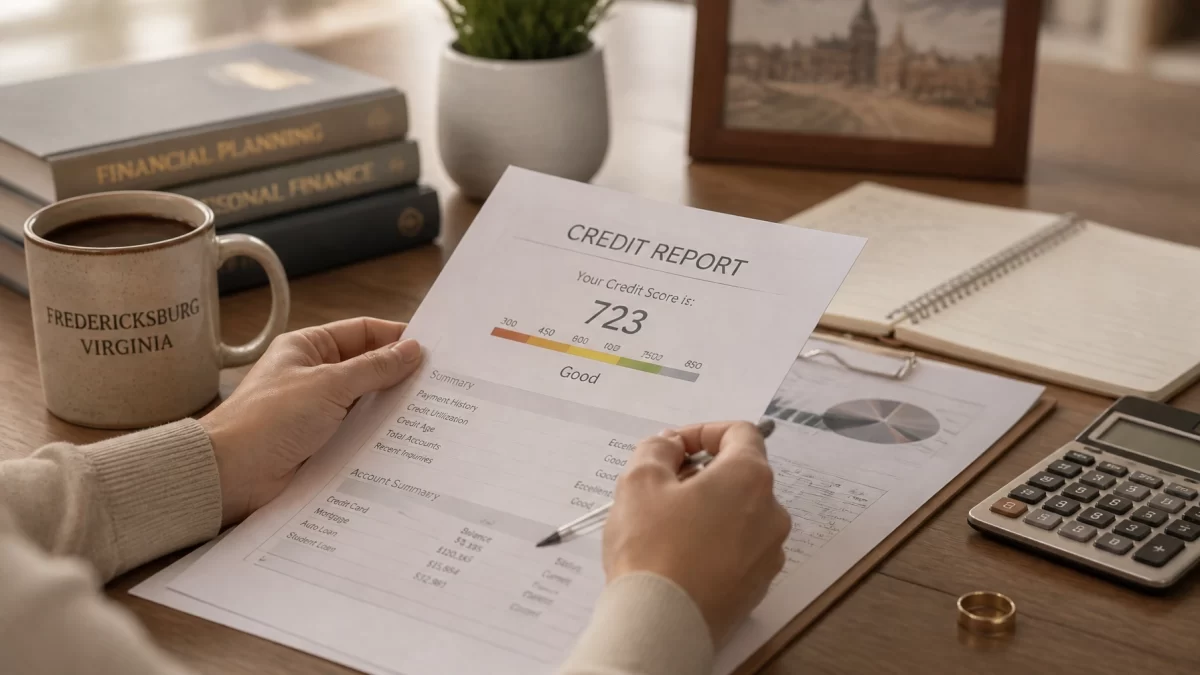
If you are navigating a divorce in the Fredericksburg region, you likely have many concerns about your financial future. Between the emotional weight of separation and the practical challenges of dividing a life, the state of your credit score can feel like a secondary worry. However, your credit score is the foundation of your post-divorce independence. It dictates whether you can secure a new lease, qualify for a mortgage on a new home, or even obtain a car loan with reasonable interest rates. I have seen many clients realize too late that their credit was damaged not by the divorce itself, but by how joint debts were handled during the process. Understanding how Virginia law interacts with your credit history is the first step toward protecting your financial autonomy.
QUICK ANSWER
Divorce does not inherently lower your credit score because credit bureaus do not track marital status. However, shared financial responsibilities like joint credit cards and mortgages can damage your score if payments are missed or if your spouse incurs significant new debt on a joint account. Protecting your credit requires a proactive strategy of separating accounts and formalizing debt responsibility in a court order.
Why Divorce Does Not Directly Affect Your Credit Score
Divorce does not appear on your credit report and marital status is not a factor used by FICO or VantageScore to calculate your credit rating. Credit reporting agencies like Equifax, Experian, and TransUnion focus exclusively on your individual and joint credit accounts, payment history, and debt utilization. While the act of filing for a Virginia divorce is a public legal event, it is not a financial event that creditors track.
The Myth of the "Divorce Score"
There is no such thing as a "divorce penalty" on your credit report. When you sit down at your computer to check your score, you will not see a deduction for your change in marital status. Your score remains tied to the contracts you have signed with lenders. If you have always maintained excellent credit habits, those habits will continue to serve you well regardless of your domestic situation.
Individual Credit History vs. Marital Status
Credit history is individual. Even if you have been married for decades, you still have your own credit file. The confusion often arises because spouses frequently open joint accounts, which causes the same data to appear on both of their reports. If you have separate credit cards or loans that were never shared, those accounts will remain unaffected by your spouse's actions during the divorce.
What Credit Bureaus Actually See
Lenders see your payment history, the amount of debt you owe, the length of your credit history, and your recent inquiries for new credit. They do not see your property settlement agreement or your final decree from the Fredericksburg Circuit Court. Their only concern is whether the monthly obligations tied to your Social Security number are being met on time.
The Joint Account Problem
The primary risk to your credit during a divorce stems from "joint and several liability," which means that both you and your spouse are 100% responsible for the full balance of a shared account. If your name is on a credit card or a mortgage, the lender does not care who was "supposed" to pay the bill according to your private agreement. If the payment is late, it will damage the credit scores of both individuals named on the account.
Understanding Joint and Several Liability
When you sign a contract for a joint account, you are giving the bank permission to hold you accountable for every penny spent. This liability remains in place even if you move out of the house or stop using the credit card. In the eyes of the lender, you are not just half responsible; you are fully responsible for the entire debt. This legal reality is often the biggest surprise for individuals in the middle of a separation.
The Impact of Authorized Users
Sometimes, a spouse is only an "authorized user" rather than a joint account holder. If you are the primary account holder and your spouse is an authorized user, you are the only person legally responsible for the debt. Conversely, if you are the authorized user on your spouse's account, their late payments could still impact your score. Removing yourself as an authorized user is often a vital step in protecting your credit.
Creditors and Private Agreements
A judge in Fredericksburg can order your spouse to pay a joint debt, but that order does not change your contract with the bank. If your spouse fails to pay, the bank will still call you, and they will still report the delinquency to the credit bureaus. While you might be able to take your spouse back to court for violating the order, your credit score will have already taken the hit.
What Happens to Joint Debt in a Virginia Divorce
Virginia law treats debt as part of the overall property division process, categorizing it as either marital, separate, or hybrid. Under Va. Code Section 20-107.3, the court has the authority to determine how marital debt should be distributed between the parties during the equitable distribution process. This classification is critical because it dictates who is legally "responsible" to the other spouse for certain obligations.
Classifying Marital vs. Separate Debt
Marital debt typically includes any debt incurred by either spouse during the marriage and before the date of last separation for the benefit of the family. Separate debt is usually debt brought into the marriage or debt incurred after the separation. If your spouse takes out a new credit card after you have moved out, that is likely their separate debt, but proving this requires clear documentation of the separation date.
The Court's Power of Distribution
During a case at the Fredericksburg Circuit Court located at 815 Princess Anne Street, a judge will look at the circumstances surrounding the debt. They consider factors like the purpose of the debt and the financial resources of each party. The court's goal is an "equitable" or fair division, which does not always mean a 50/50 split.
Why the Decree Is Not a Shield
While a judge can assign a debt to your spouse, they cannot force the credit card company to take your name off the account. The court order governs the relationship between you and your spouse, not the relationship between you and your creditors. If the decree says your spouse must pay the marital home mortgage but they stop paying, you remain liable to the mortgage company.
The Risk of Your Spouse Running Up Debt Before the Divorce Is Final
One of the most dangerous periods for your credit score is the time between your separation and the finalization of the divorce. If you still have open joint credit cards, a vindictive or financially struggling spouse could potentially charge thousands of dollars to those accounts. Because you are still legally married and the account is joint, you may be held responsible for these new charges.
Monitoring Joint Accounts in Real Time
I recommend that my clients keep a very close eye on all shared accounts during the separation period. You should sign up for text or email alerts for every transaction over a small amount, such as $1.00. This allows you to see immediately if your spouse is making unusual or large purchases that could jeopardize your financial standing.
The Impact of High Credit Utilization
Even if your spouse is making the minimum payments, high balances on joint accounts can lower your score. Credit utilization, or the ratio of your debt to your available credit limits, is a major factor in your credit score. If a joint card is maxed out, your score will drop, making it harder for you to take necessary financial steps to establish your new household.
Taking Action on Spending Sprees
If you notice your spouse is intentionally running up debt, you must act quickly. This often involves filing motions for "pendente lite" (temporary) relief in court to prevent the further dissipation of assets. Documenting these charges is essential for your attorney to argue that these debts should be classified as the separate responsibility of the spending spouse during property division.
How to Protect Your Credit Score During a Virginia Divorce
Protecting your credit requires a proactive approach that begins the moment you decide to separate. You cannot afford to wait until the final decree to start untangling your financial life. With more than 20 years of experience in Virginia family law, Shawna L. Stevens has helped countless clients navigate these complexities to ensure they emerge from divorce with their credit intact.
Freezing and Closing Joint Accounts
The most effective way to prevent new debt is to close joint credit cards or convert them to "inactive" status so no new charges can be made. If the bank will not allow you to close the account without both signatures, you can often ask to have the credit limit lowered to the current balance. This prevents further spending while you work out who will pay off the remaining amount.
Monitoring Your Credit Reports Regularly
You should obtain a copy of your credit report from all three major bureaus immediately. You can do this for free at AnnualCreditReport.com. This provides a baseline of all accounts currently in your name. Continue to monitor these reports throughout the divorce process to catch any unauthorized accounts or missed payments early.
Communication and Transparency
If you are on relatively good terms with your spouse, try to agree on a temporary payment plan for all joint bills. Written agreements, even if informal, can provide a paper trail if things go wrong later. However, never rely solely on a spouse's word. Verify that payments are actually being made by logging into the accounts yourself.

After the Divorce: What the Decree Says and What Creditors Hear
The "gap" between a divorce decree and creditor policies is where many credit scores go to die. Even after the judge signs your final paperwork, your work is not done. You must actively follow through on the requirements of the decree to ensure that accounts are actually refinanced, closed, or paid off in a way that removes your name from the liability.
The Requirement to Refinance
Many divorce decrees in Fredericksburg require one spouse to refinance a car or the marital home to remove the other spouse's name. This is the only way to truly end your liability for those debts. However, if the spouse who kept the asset cannot qualify for a new loan on their own, the "joint" status remains. It is vital to have "sell" provisions in your agreement if a refinance cannot be completed within a certain timeframe.
Indemnification Clauses in Agreements
A well-drafted property settlement agreement will include an "indemnification" clause. This means that if your spouse fails to pay a debt they were assigned and the creditor comes after you, your spouse must reimburse you for your losses and legal fees. While this does not prevent the credit score damage, it gives you a legal path to recover your money.
Notifying Creditors of the Final Decree
Some people mistakenly believe that sending a copy of their divorce decree to a credit card company will force them to remove their name. Unfortunately, creditors are not parties to your divorce and are not bound by the judge's order. They will only remove you if the account is closed or if they approve a formal application to remove a joint cardholder, which is rare.
Rebuilding After Divorce
Once the dust has settled and your accounts are separated, you may find that your credit score has dipped slightly due to the closure of old accounts or the loss of "available credit" from joint lines. Rebuilding is a gradual process, but it is entirely possible with consistent effort. Shawna L. Stevens PLLC has represented Fredericksburg families in divorce cases for over 20 years, and we have seen many clients successfully rebuild their financial lives.
Establishing New Individual Credit
If you do not already have credit cards or loans in your own name, now is the time to open them. Start small with a secured credit card if necessary. By making small purchases and paying them off in full every month, you demonstrate to lenders that you are a reliable borrower on your own merits.
Diversifying Your Credit Mix
Having a mix of different types of credit, such as a credit card and a small installment loan, can help boost your score. However, be careful not to open too many accounts at once. Each application results in a "hard inquiry," which can temporarily lower your score. Space out your applications and only take on debt you can comfortably manage on your single income.
Staying Diligent with Payments
The single most important factor in your credit score is your payment history. Set up automatic payments for all of your bills to ensure you never miss a deadline. Even a single 30-day late payment can cause a significant drop in your score. Families throughout the Fredericksburg region, from Stafford and Spotsylvania to King George, Caroline, Orange, and Westmoreland, have relied on Shawna L. Stevens PLLC for over 20 years to help them plan for these post-divorce realities.
Plan Your Financial Future with Confidence
Every family law situation is different. If you have questions about how this applies to your case, Shawna L. Stevens PLLC has been helping families in Fredericksburg and the surrounding counties for over 20 years. Shawna L. Stevens understands the local procedures at the Fredericksburg Circuit Court and can help you craft a strategy that protects both your rights and your credit score.Contact Shawna L. Stevens PLLC Today | (540) 310-4088
Frequently Asked Questions
Does closing a joint credit card during divorce hurt my credit score?
Closing a joint credit card can lower your credit score because it reduces your total available credit and may shorten the average age of your accounts. Under Va. Code Section 20-107.3, debts are divided during divorce, but the credit bureaus only see the account closure. While the score might dip temporarily, closing the account is often the only way to prevent a spouse from incurring more debt that you would be responsible for.
Can my spouse open new credit cards in my name during separation?
Opening a credit card in your name without your consent is identity theft, regardless of your marital status. Shawna L. Stevens PLLC regularly advises clients in Fredericksburg to check their credit reports at AnnualCreditReport.com to ensure no unauthorized accounts have been opened. If this occurs, you should report it to the credit bureaus and bring it to the attention of your attorney immediately.
Should I change my name on my credit accounts before the divorce is final?
You should typically wait until the final decree is signed by the Fredericksburg Circuit Court judge before changing your name on credit accounts. The decree usually includes a formal provision allowing you to resume your maiden name. Once you have the certified court order, you can provide it to your creditors to update your records without affecting your credit history.
If the judge orders my spouse to pay the mortgage, am I safe from foreclosure?
You are not safe from foreclosure if your name is still on the mortgage, even if the judge orders your spouse to pay. Lenders are not bound by your divorce decree and will proceed with foreclosure if payments are missed. Shawna L. Stevens (VSB No. 65992) often recommends including a "power of sale" provision in the property settlement agreement to ensure the home can be sold if the responsible spouse falls behind.
How often should I check my credit report during a divorce in Fredericksburg?
You should check your credit report at least once a month during the divorce process to catch any missed payments or new accounts. Monitoring is especially critical if you are still tied to your spouse through a marital home or joint loans. Promptly identifying issues allows you to address them in court before they cause permanent damage to your financial reputation.
Will my spouse's poor credit history affect my individual score after divorce?
Your spouse's poor credit history will not affect your individual score once all joint accounts are closed or your name is removed. Credit reports are tied to individuals, not couples. Shawna L. Stevens PLLC helps clients identify which accounts are truly joint and which are separate so you can focus on maintaining your own positive credit habits.
Can I be held responsible for debt my spouse incurred before we met?
You are generally not responsible for debt your spouse incurred before the marriage unless you signed onto the account as a joint holder later. Under Virginia law, pre-marital debt is usually classified as separate debt. If a creditor attempts to collect your spouse's separate debt from you, it is important to provide documentation showing the debt was incurred prior to the marriage.
What should I do if my spouse stops paying a joint bill they were ordered to pay?
If your spouse stops paying a court-ordered debt, you should notify your attorney and may need to file a motion for contempt at the Fredericksburg Circuit Court. In the meantime, if you have the funds, it is often wise to make the payment yourself to protect your credit score and then seek reimbursement from your spouse through the legal system.
How do I remove my name from a joint car loan during divorce?
Removing your name from a joint car loan usually requires the other spouse to refinance the loan in their name only. The lender will evaluate your spouse's credit and income to determine if they qualify for the loan on their own. Shawna L. Stevens has more than 20 years of Virginia family law experience and can help you structure your agreement to require this refinance by a specific deadline.
As a Fredericksburg family law attorney with over two decades of local court experience, Shawna L. Stevens understands that your credit score is more than just a number; it is your ticket to a fresh start. Whether you are dividing complex assets or simply trying to ensure your monthly bills are paid, having a knowledgeable advocate on your side is essential. Shawna L. Stevens PLLC (VSB No. 65992) represents clients across the seven-county region from her office at 307 Lafayette Boulevard, Suite 200, Fredericksburg, Virginia 22401. If you have questions about your specific situation, Shawna L. Stevens is here to help. Contact our Fredericksburg office to schedule a confidential consultation at (540) 310-4088.
Going through a divorce in the Fredericksburg area? With more than 20 years of experience in Virginia family law, Shawna L. Stevens can help. Learn more from an experienced divorce lawyers in Fredericksburg VA or call (540) 310-4088 to schedule a confidential consultation.