
QUICK ANSWER BOX
Can a military member stationed overseas file for divorce in Virginia?
Yes, under Va. Code Section 20-97, a service member stationed overseas can file for divorce in Virginia if they were domiciled in the Commonwealth for at least six months immediately before being sent abroad. Virginia maintains jurisdiction because military service does not change a person's legal domicile unless they take specific actions to change it.
If you are currently stationed at an overseas duty station and considering a divorce, the process often feels significantly more complex than a standard domestic filing. Determining which court has the authority to hear your case is the first and most critical step in navigating this transition. With more than 20 years of experience in Virginia family law, Shawna L. Stevens has helped numerous military families navigate the intersection of state law and federal military regulations.
Virginia is a common jurisdiction for military divorces due to the high density of service members at installations such as MCB Quantico, NSF Dahlgren, and Fort Belvoir. For those currently serving in Europe, Asia, or other foreign territories, the law provides specific protections to ensure you can still access the Virginia court system. Understanding how your overseas orders affect your residency status is essential to ensuring your case is filed correctly and efficiently.
Understanding Domicile vs. Residence for Military Families
Virginia courts distinguish between your physical residence and your legal domicile when determining jurisdiction for a military divorce. While your residence is where you currently live due to your PCS orders, your domicile is the place you consider your permanent home and where you intend to return after your service ends.
The Definition of Legal Domicile
Your legal domicile is the state where you maintain a permanent connection, pay taxes, and hold a driver's license. For military members, your domicile often remains the same throughout your entire career, regardless of where the military sends you. Shawna L. Stevens PLLC often assists clients in establishing that their connection to Virginia remains intact despite being stationed in a foreign country.
Establishing Residency for Divorce Purposes
Under Virginia law, at least one spouse must be an actual bona fide resident and domiciliary of the Commonwealth for at least six months before filing. For military members, physical presence in the state is not always required if you have maintained your Virginia domicile. This distinction allows service members stationed in places like Germany or Japan to still file through the Virginia court system.
Maintaining Virginia Ties While Overseas
To prove your domicile remains in Virginia, you may need to show ongoing connections such as voting records, vehicle registrations, or tax filings. Courts in Stafford County and surrounding areas look for these indicators to confirm that you have not abandoned your Virginia domicile. Keeping consistent records while stationed overseas is a practical way to protect your ability to file for divorce in Virginia.
Jurisdiction under Va. Code Section 20-96
The authority of a Virginia court to grant a divorce is grounded in specific statutory requirements that must be met at the time of filing. Under Va. Code Section 20-96, the circuit courts of Virginia have jurisdiction over suits for annulling or affirming marriages and for divorces.
The Six Month Requirement for Overseas Members
A military member stationed in a foreign country is deemed to have been a resident of Virginia if they were domiciled in Virginia for the six months immediately preceding their overseas assignment. This specific provision in Va. Code Section 20-97 ensures that service members do not lose their legal rights in their home state simply because they are serving abroad.
How Overseas Assignment Affects Jurisdiction
Being stationed overseas does not break the continuity of your Virginia residency for legal purposes. As long as you were a resident for at least six months before your PCS orders took you out of the country, you are considered a resident for the duration of that assignment. This protection is vital for families who have deep roots in the Fredericksburg region.
Proving Your Intent to Return
The court may occasionally ask for evidence that you intend to return to Virginia or that you consider Virginia your permanent home. Documents such as a Leave and Earnings Statement (LES) showing Virginia as your state of legal residence are often sufficient evidence. Shawna L. Stevens PLLC provides guidance on which documents are most effective for proving jurisdiction to a Virginia judge.
Child Custody and the UCCJEA for Overseas Families
While a Virginia court might have jurisdiction over your divorce, it may not automatically have the authority to decide matters of child custody. The Uniform Child Custody Jurisdiction and Enforcement Act (UCCJEA), found in Va. Code Section 20-146.12, governs which court can make initial custody determinations.
Determining the Home State of the Child
Under the UCCJEA, the home state is generally where the child has lived with a parent for at least six consecutive months before the start of the proceeding. If your children have been living with you at an overseas duty station for more than six months, the foreign country might technically be considered their home state. However, the UCCJEA treats foreign countries as states of the United States for the purpose of determining jurisdiction.
Emergency Jurisdiction and Significant Connections
In some situations, Virginia courts can exercise jurisdiction if the child is physically present in the state and has been abandoned or if there is an emergency. Additionally, if no other state has home state jurisdiction, a Virginia court may step in if the child and at least one parent have a significant connection to the Commonwealth. This is common for families who have recently moved from Stafford or Spotsylvania to an overseas location.
Modifications While Stationed Abroad
If a Virginia court has already issued a custody order, it typically retains exclusive continuing jurisdiction as long as one parent still lives in Virginia. If both parents and the children have moved overseas, modifying that order becomes more complex. Navigating the child custody laws in Virginia requires a clear understanding of how these jurisdictional rules apply to your specific family structure.
Serving Divorce Papers to a Spouse Overseas
Serving legal documents to a spouse who is living in a foreign country requires strict adherence to international treaties and military regulations. Failure to follow these procedures can result in the court dismissing your case or refusing to enter a final decree.
The Hague Convention Requirements
The Hague Service Convention is an international treaty that outlines how legal documents must be served in participating countries. If your spouse is living in a country that is a party to the Convention, you must generally serve them through that country's Central Authority. This process can be time-consuming and often requires translating the documents into the local language.
SCRA Protections Against Default
The Servicemembers Civil Relief Act (SCRA) provides significant protections for active-duty members who are served with legal papers while deployed or stationed overseas. A court cannot enter a default judgment against a service member without first appointing an attorney to represent their interests. If you are the one being served, you may be able to request a stay of the proceedings if your military duties prevent you from participating in the case.
Alternative Service Methods for Military Families
In some cases, a spouse may agree to waive formal service and sign an acknowledgment of receipt. This is the most efficient way to proceed with an uncontested divorce while stationed overseas. If your spouse is uncooperative, Shawna L. Stevens PLLC can assist in coordinating formal service through military channels or international legal authorities.
Filing for Divorce When Both Spouses Are Overseas
If both spouses are currently living at an overseas duty station, filing for divorce in Virginia is still possible provided the jurisdictional requirements are met. This scenario often arises when a military family moves together to a foreign installation but decides to separate during the tour.
Shared Domicile Scenarios
If both you and your spouse were domiciled in Virginia before moving overseas, Virginia remains the logical and legal forum for your divorce. The court will treat both of you as residents of the Commonwealth for the purpose of the filing. This is often the preferred route for families who intend to return to the Fredericksburg area after their time abroad.
Choosing the Right Forum for Your Case
Sometimes, military families have the option to file in multiple jurisdictions, such as their home of record or the state where they were last stationed. It is important to compare how different states handle property division and spousal support. For example, understanding how alimony works in Virginia may influence your decision to file here rather than in another state.
Practical Documentation Needs for Overseas Filings
Filing from abroad requires careful coordination of paperwork, as many documents may need to be notarized. Most military installations provide notary services through the JAG office that are recognized by Virginia courts. Ensuring that your divorce and taxes in Virginia are handled correctly is also a key part of the final settlement.
Handling PCS Orders During Active Divorce Cases
Receiving Permanent Change of Station (PCS) orders in the middle of a divorce case can create significant logistical and legal challenges. These orders can affect the court's jurisdiction and may require temporary orders to address relocation and custody.
Transferring Jurisdiction and the 6-Month Rule
If a case has already been filed in a Virginia court, that court generally maintains jurisdiction even if one or both parties receive PCS orders to another location. However, if the case has not yet been filed, moving to a new state may start the residency clock over for that new jurisdiction. Continuing with your Virginia filing is often the most stable option for those connected to the local military community.
Maintaining Momentum in Your Case
Distance can often slow down a legal proceeding, but modern Virginia courts allow for many hearings to be conducted remotely. Shawna L. Stevens PLLC works to ensure that your case continues to move forward even if your orders take you to a different time zone. Coordination with your chain of command is also helpful to ensure you have the time necessary to attend virtual hearings.
Temporary Orders and Relocation Issues
If PCS orders require one parent to move while a custody case is pending, the court may need to issue temporary orders. These orders address how the move will affect the children and what the visitation schedule will look like in the interim. Relocation is a sensitive issue in Virginia courts, and having an experienced attorney is crucial when military orders conflict with a proposed parenting plan.
Practical Steps for Families Near Quantico and Dahlgren
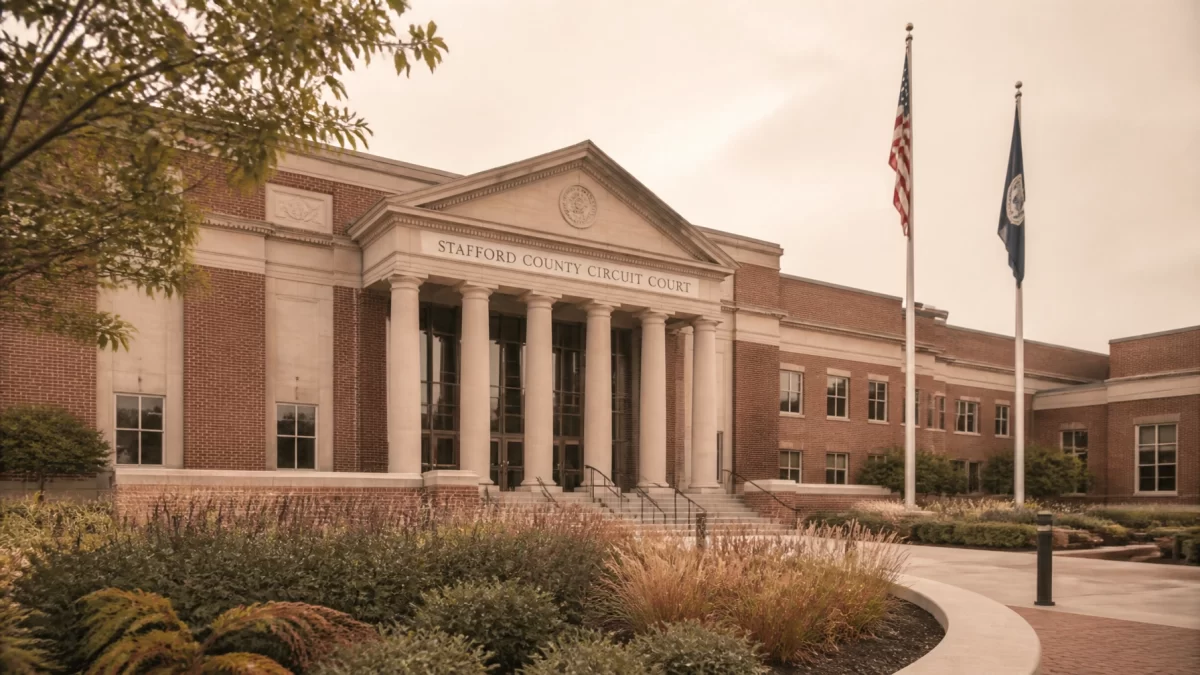
For service members and spouses connected to MCB Quantico, NSF Dahlgren, or Fort Belvoir, local court procedures play a significant role in how your case is handled. Each circuit court, including the Stafford County Circuit Court at 1300 Courthouse Road, Stafford, VA 22554, has its own nuances regarding military filings.
Coordinating with the JAG Office
While the JAG office cannot represent you in your divorce, they can provide valuable initial guidance and help you understand your military-specific benefits. They can also assist with the notarization of documents and provide information on how your divorce might affect your security clearance or housing allowance. It is often helpful to consult with JAG before hiring a private attorney to handle the litigation.
Local Court Procedures in Stafford and Spotsylvania
The courts in the Fredericksburg region are well-versed in military divorce issues and frequently handle cases involving overseas service members. Filing in the Stafford County Circuit Court requires specific forms and a clear statement of your jurisdictional grounds. Shawna L. Stevens PLLC has represented clients across these local courts for over two decades, providing the local insight necessary for a smooth process.
Gathering Necessary Evidence for Your Case
Being overseas makes it harder to gather physical documents, so it is important to start collecting electronic copies of your financial records, LES statements, and housing contracts as soon as possible. These documents are essential for child support calculations in Virginia and for the equitable distribution of marital property.
Families throughout the Fredericksburg region, from Stafford and Spotsylvania to King George, Caroline, Orange, and Westmoreland, have relied on Shawna L. Stevens PLLC for over 20 years. Shawna L. Stevens (VSB No. 65992) has practiced family law in Fredericksburg, Virginia for more than 20 years, representing clients across the seven-county region from her office at 307 Lafayette Boulevard, Suite 200, Fredericksburg VA 22401.
Frequently Asked Questions
Can I file for divorce in Virginia if I have never lived there but it is my home of record?
Virginia law requires at least one party to be an actual resident and domiciliary for at least six months. If Virginia is your home of record and you have maintained your legal domicile here, you may meet the requirements even if you are currently stationed elsewhere.
How long does a military divorce take if one spouse is overseas?
The timeline for a military divorce depends on whether the case is contested or uncontested. Uncontested divorces can often be finalized in a few months, while contested cases involving overseas service can take longer due to the requirements of the Hague Convention and SCRA.
Does my spouse have to agree to the divorce for me to file in Virginia from overseas?
Your spouse does not have to agree to the divorce for you to file, but they must be properly served with legal notice. If they are also military and stationed overseas, you must comply with the SCRA and international service protocols.
What happens to my BAH if I file for divorce while stationed abroad?
Your Basic Allowance for Housing (BAH) status may change once the divorce is finalized or if your family's housing situation changes during the separation. Shawna L. Stevens PLLC can help you understand how support orders might interact with your military entitlements.
Can a Virginia court decide custody if my children are living with me in Germany?
A Virginia court can decide custody if it has jurisdiction under the UCCJEA, which often depends on whether Virginia was the children's home state before they moved overseas or if there are significant connections to the state.
Is a legal separation required before filing for divorce in Virginia?
Virginia requires a period of separation (six months with a signed agreement and no children, or one year with children) before a no-fault divorce can be granted. This period applies regardless of where you are stationed.
Can I attend my Virginia court hearings virtually while stationed overseas?
Many Virginia circuit courts, including those in Stafford and Spotsylvania, allow for remote or telephonic appearances for certain hearings, especially for service members stationed abroad.
What if my spouse is a foreign national and we are living in their home country?
Filing for divorce in Virginia when a spouse is a foreign national involves complex service and jurisdictional issues. Virginia law still allows you to file if you have maintained your domicile in the state for the required period.
How does the SCRA protect me if my spouse files for divorce in Virginia while I am deployed?
The SCRA allows you to request a stay of the proceedings if your deployment materially affects your ability to defend the case. Shawna L. Stevens PLLC frequently helps service members navigate these protections.
Will a Virginia divorce decree be recognized by the military?
Yes, a valid divorce decree from a Virginia circuit court is recognized by the Department of Defense for updating DEERS, changing BAH status, and dividing military retirement benefits.
Every family law matter is different. The best way to understand what your case may involve is to schedule a confidential consultation with our office. Shawna L. Stevens PLLC has represented military families in overseas duty station cases for over 20 years.
INLINE CTA BOX
If you are a service member or spouse facing a divorce while stationed overseas, the legal landscape can be daunting. As a Fredericksburg family law attorney with over two decades of local court experience, Shawna L. Stevens provides the personalized strategy you need to protect your future. Contact Shawna L. Stevens PLLC at (540) 310-4088 to schedule a confidential consultation and discuss your military divorce jurisdiction.

Navigating a military divorce near Quantico, Dahlgren, or Fort Belvoir? With more than 20 years of experience in Virginia family law, Shawna L. Stevens can help. Learn more from an experienced Virginia military divorce lawyer or call (540) 310-4088 to schedule a confidential consultation.